Understanding Discovery Requests in Legal Proceedings
In legal proceedings, the discovery process plays a crucial role. It is a phase where parties involved in a litigation have the opportunity to obtain evidence from each other. This evidence is instrumental in preparing for trial or any form of resolution. Despite its importance, discovery requests frequently encounter objections. These objections can vary significantly, depending on the specific context and circumstances of a case. By gaining a comprehensive understanding of these common objections, parties involved in litigation can better navigate this complex and often challenging landscape.
Relevance
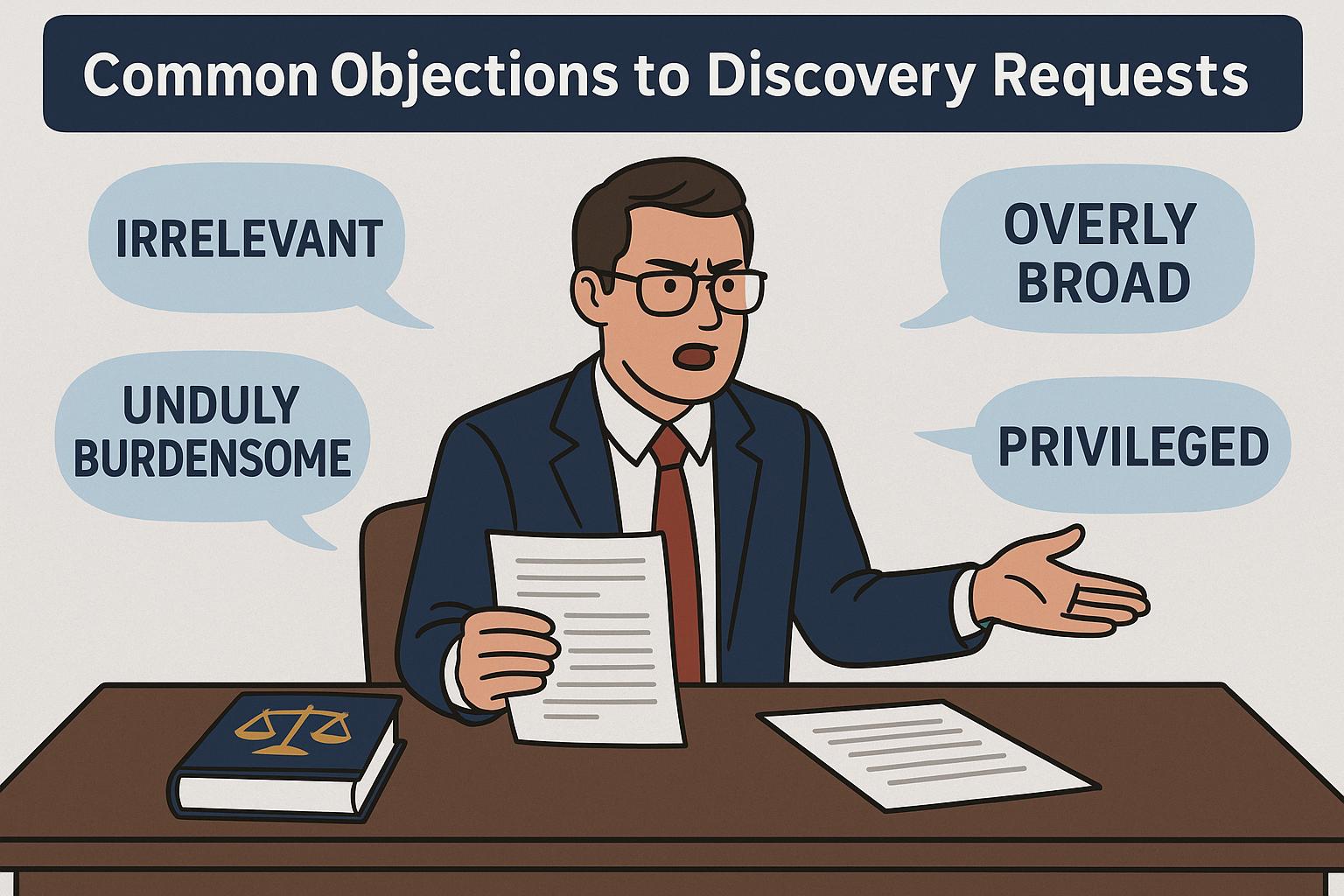
One of the most frequent objections in discovery is related to relevance. A discovery request may be deemed irrelevant if the information sought does not appear reasonably likely to lead to the discovery of admissible evidence. In legal terms, relevance concerns whether the information pertains to the issues in the case. If a request is considered extraneous to the matter being litigated, a party may object to it on the grounds that it seeks information outside the necessary scope. Courts typically require that discovery must be tethered to the case, ensuring requests are not fishing expeditions devoid of significance to the matter at hand.
Overbreadth
Another common objection arises from the concept of overbreadth. Overbreadth objections are made when a discovery request is perceived as too broad or far-reaching, effectively requiring the responding party to disclose an unwarranted volume of data. Such extensive demands might impose significant burdens without corresponding benefits regarding the trial’s outcomes. Opposing parties may argue that the enormous breadth and broad scope of such requests impose an undue burden, lacking appropriate specificity. Courts find an excessive demand for information unacceptable, preferring requests that are precise and narrowly tailored to the issues.
Privilege
The notion of privilege serves as a critical shield in the discovery process, offering protection to certain communications and materials from disclosure. For instance, attorney-client communications and work product are typically privileged. When a discovery request demands such privileged information, the responding party can object, emphasizing the necessity of preserving confidentiality and respecting privacy. This objection hinges on the principle that certain relationships and communications deserve protection to facilitate honest and open dialogue, free from the threat of disclosure.
Undue Burden or Expense
Objections based on undue burden or expense are put forward when complying with a discovery request is disproportionately costly or taxing in relation to the perceived value or necessity of the information sought. Here, the courts engage in a balancing act, considering factors such as time, effort, and monetary costs. This ensures that the discovery process remains efficient and fair, prohibiting requests that, though possibly relevant, are excessively demanding when weighed against their practical utility or the resources required to fulfill them.
Annoyance, Embarrassment, or Oppression
There are occasions where discovery requests could cause unwarranted annoyance, embarrassment, or oppression. Such issues are particularly apparent when requests appear to stem from intentions to harass or intimidate the party receiving them. Additionally, excessive or intrusive demands that tip the scales towards abuse rather than fact-finding may be challenged. Courts actively monitor for such dubious tactics and have the authority to sustain objections, safeguarding parties from potential exploitation masked under the guise of legitimate discovery requests.
Ambiguity
It is not uncommon for discovery requests to be critiqued on the grounds of ambiguity. Requests that are vague or unclear can pose significant challenges for the responding party, making it difficult to discern the exact information being sought. Objecting on the basis of ambiguity ensures the responding party can respond in a manner that is both accurate and exhaustive. By establishing clarity in the language and demands of a discovery request, litigation proceeds efficiently and effectively, enhancing the value of the discovery process in unveiling pertinent facts.
Duplicity
Duplicity concerns arise when a party is confronted with requests for information that has already been provided or is otherwise available. Objecting on these grounds helps prevent unnecessary repetition, streamlining the discovery process, and preserving resources. Eliminating redundancy ensures that discovery serves its intended purpose, to uncover new and relevant evidence, rather than cycling through data already in possession of the litigating parties. This objection reinforces a disciplined approach to information gathering during legal proceedings.
Timeliness
Finally, objections may be rooted in concerns over timeliness. Discovery requests must adhere to established procedural timelines. If a request is deemed untimely, either for falling outside statutory deadlines or because the discovery phase has elapsed, a party may object. Timeliness ensures that all parties are well-prepared for trial and that the discovery phase contributes meaningfully to uncovering the facts of the case. Strict adherence to timelines thus upholds the procedural integrity of legal proceedings.
Conclusion
In conclusion, the discovery process remains a cornerstone of fair and transparent legal proceedings, allowing litigation parties to exchange critical evidence. Common objections to discovery requests reflect attempts to balance the right to obtain information with reasonable protections for privacy, relevance, and procedural efficiency. A keen understanding of these objections can be instrumental for both legal practitioners and litigants, aiding them in navigating the vital yet complex discovery phase. By mastering these elements, parties can actively engage in the pursuit of truth and justice, ensuring that the discovery process serves its foundational role in the legal system.