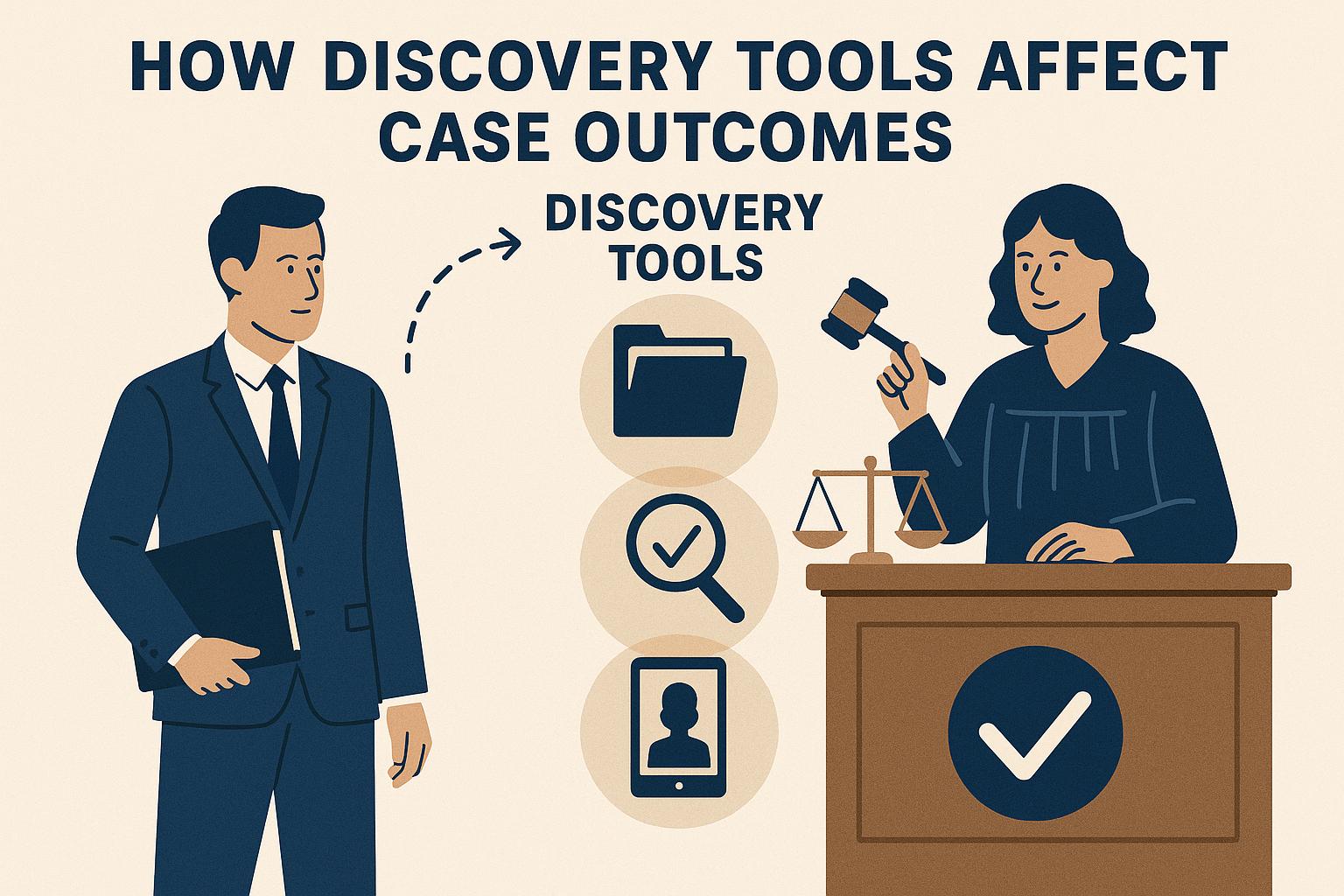
The Role of Discovery Tools in Legal Cases
The discovery process is a vital component within any legal proceeding. Its main function is to allow both sides of a legal conflict to access necessary evidence, which is essential for constructing their individual arguments. As technology has progressed, traditional discovery methods have transformed, giving rise to various modern discovery tools. These innovations hold considerable sway over case outcomes by influencing the productivity, breadth, and depth of information acquisition.
Enhancing Information Gathering
Discovery tools significantly improve the collection of evidence by facilitating the retrieval of vast amounts of data. Tools designed for electronic discovery, or e-discovery, enable legal teams to efficiently process and analyze large quantities of digital information. This includes emails, text messages, and various electronic documents. The ability to rapidly sift through such material permits a more thorough analysis, helping to uncover pivotal evidence that might have been missed with older methods.
Comprehensive Analysis of Digital Evidence
The transformation from paper to digital has broadened the scope of discoverable evidence. Records that were once dense with paper documents are now encompassed by digital files stored on numerous devices. Discovery tools tap into this vastness, ensuring that each piece of potential evidence is accounted for. This further guarantees that legal professionals can construct a more nuanced picture of the case, drawing insights that bolster their overall legal strategy.
Efficiency in Handling Large Data Sets
Given the enormous growth in digital data worldwide, managing and analyzing extensive data sets has become pivotal in legal cases. Discovery tools equipped with cutting-edge algorithms aid legal teams in swiftly navigating through massive amounts of data. This capability not only streamlines the discovery process but also secures the inclusion of all relevant data, considerably reducing the risk of crucial evidence being unwittingly excluded.
Advanced Algorithms for Data Management
The algorithms embedded within these discovery tools are continually refined, improving their capacity to swiftly sort and categorize data. This technological evolution has led to faster case preparations and more precise legal arguments. By employing automation and machine learning, discovery tools have become indispensable allies in understanding data complexities and delivering reliable case preparations.
Reducing Costs and Time
Discovery tools also provide tangible benefits in terms of cost and time reduction. Automating substantial portions of the discovery process reduces the manual effort needed, decreases susceptibility to human error, and shortens preparation time ahead of trials. Although the upfront costs of implementing such technology can be substantial, the long-term savings on resources make these tools an economically viable solution.
The Balance Between Investment and Savings
While there is an initial financial commitment to acquiring and setting up discovery tools, the returns manifest in reduced timescales and workloads associated with discovery. Moreover, these tools enable law firms to reallocate human resources toward more strategic tasks, further enhancing their potential for developing stronger case strategies.
Improving Case Strategies
Discovery tools furnish legal teams with enriched insights into the specifics of a case, thereby improving strategic planning. Access to a comprehensive database of information allows for more precise evaluation regarding the strengths and flaws within a case. This insight enables practitioners to refine their arguments and craft more focused strategies, potentially securing more favorable verdicts for their clients.
Case Strategy Refinement
The wealth of information accessible through discovery tools fosters the development of more profound and informed argumentation. Legal teams are empowered to tackle cases with unprecedented precision, matching facts and evidence with legal precedence effectively. As a result, broader strategic insights can be gained, fortifying client positions within legal proceedings.
In conclusion, the integration of discovery tools into legal practices profoundly affect case outcomes by enhancing the completeness and efficiency in evidence gathering. These tools empower legal professionals to traverse intricate data landscapes effectively, culminating in more informed and strategic case resolutions. By evolving alongside technology, legal practitioners stand to benefit from these advancements, ultimately aiding in the pursuit of justice.