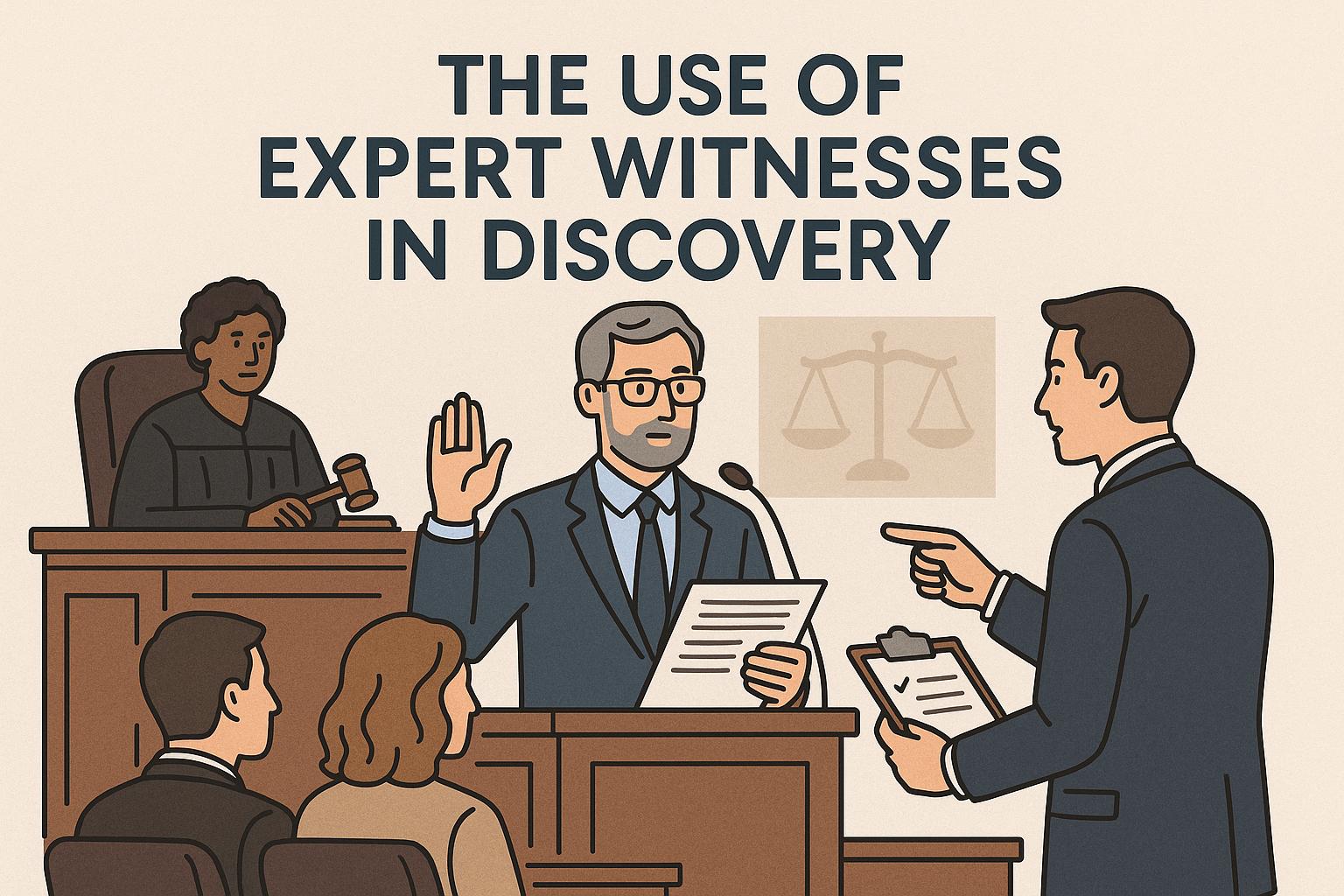
The Role of Expert Witnesses in Discovery
In legal proceedings, the discovery phase represents a critical juncture for both parties involved in a dispute. During this stage, each side diligently works to collect evidence to bolster its respective case. One of the key elements integral to this process is the employment of expert witnesses.
Understanding the Role of Expert Witnesses
Fields Commonly Involving Expert Witnesses
Expert witnesses are frequently called upon in a diverse array of fields, encompassing:
Medical and Health Care: In cases related to medical conditions, treatment standards, or professional medical conduct, expert witnesses offer specialized insights that can help elucidate complex medical facts for the court. Their assessments of medical accuracy, standard procedures, and potential malpractices are often vital in determining the validity of claims made.
Finance and Accounting: In matters involving financial disputes, valuation, loss calculations, or business operations, expert witnesses provide in-depth analysis of financial statements or scrutinize business practices. Their expertise can reveal inconsistencies, highlight financial inaccuracies, or establish the economic implications of specific business decisions.
Engineering and Technology: In legal matters concerning technical processes, equipment failure, or product liability, expert witnesses can delineate the underlying technical details that may not be easily understood by laypeople. Their ability to explain technological intricacies can be crucial in assessing whether industry standards were met or breached.
These experts are invaluable in cases where the knowledge required extends beyond that of the average juror, enabling the court to make better-informed decisions.
The Discovery Process
The discovery phase provides a structured framework for the parties involved to identify possible expert witnesses and exchange pertinent information. This process often includes several critical steps:
Deposition of Experts: Attorneys are tasked with questioning expert witnesses under oath during depositions. This procedure grants the opposition a chance to evaluate not just the credibility but also the relevance of the expert’s expected testimony. Depositions allow attorneys to probe the foundation of the expert’s opinions and identify potential weaknesses or biases.
Disclosure Requirements: It is mandated that each party discloses the identities and provides synopses of the anticipated testimonies offered by their selected expert witnesses. This requirement fosters transparency and ensures that both sides are afforded a fair opportunity to contest or corroborate the evidence presented.
Challenges in Using Expert Witnesses
Despite their pivotal contributions, integrating expert witnesses into a legal case can present several challenges:
Qualification Disputes: One common hurdle is the potential for qualification disputes, where opposing parties attempt to undermine the expert’s authority by challenging their credentials, expertise, or suitability to testify. Courts often have to rule on these disputes to ensure that only qualified experts with relevant expertise take the stand.
Bias Concerns: The expectation of impartiality from expert witnesses is critical; however, their credibility can be questioned if conflicts of interest are perceived, such as ties to parties in the case. Opposing parties may scrutinize the history of the expert’s engagements to detect any potential bias that may color their opinion.
Conclusion
In summary, expert witnesses play a fundamental role in the discovery process within legal proceedings. Their ability to elucidate complex matters and offer informed judgments can notably affect the final resolution of a case. As attorneys navigate the intricacies of selecting suitable experts and contesting their testimonies, the strategic employment of expert witnesses remains an essential component of contemporary litigation. Their expertise not only aids the court in interpreting complex evidence but also ensures that justice is served based on a thorough understanding of the nuanced issues at hand.