Understanding Prelitigation Discovery Tools
In the realm of law, prelitigation discovery tools are essential components that help parties gather pertinent information before formally initiating a lawsuit. This phase is crucial because it allows parties to assess the strengths and weaknesses of their case, facilitating informed decisions about whether to proceed with litigation. Prelitigation discovery is predominantly used in civil cases and can significantly impact the direction and outcome of a case.
The Purpose of Prelitigation Discovery
The primary goal of prelitigation discovery is to enable parties to access information that might be crucial for the prospective legal action. By examining the facts and evidence upfront, parties can decide whether there is a basis for a lawsuit and prepare their legal strategy accordingly. This process can lead to settlements, avoiding lengthy and costly litigation.
Prelitigation discovery provides a strategic advantage to both parties involved in a potential lawsuit. It opens channels for communication and fosters transparency, which can bridge the gap between disputing sides. By collecting essential information before the actual court proceedings, parties can enter negotiations with confidence, having a clearer understanding of their standing. This can pave the way for settlements, often seen as a favorable outcome due to the reduced expenses and time commitment associated with protracted court battles.
Key Prelitigation Discovery Tools
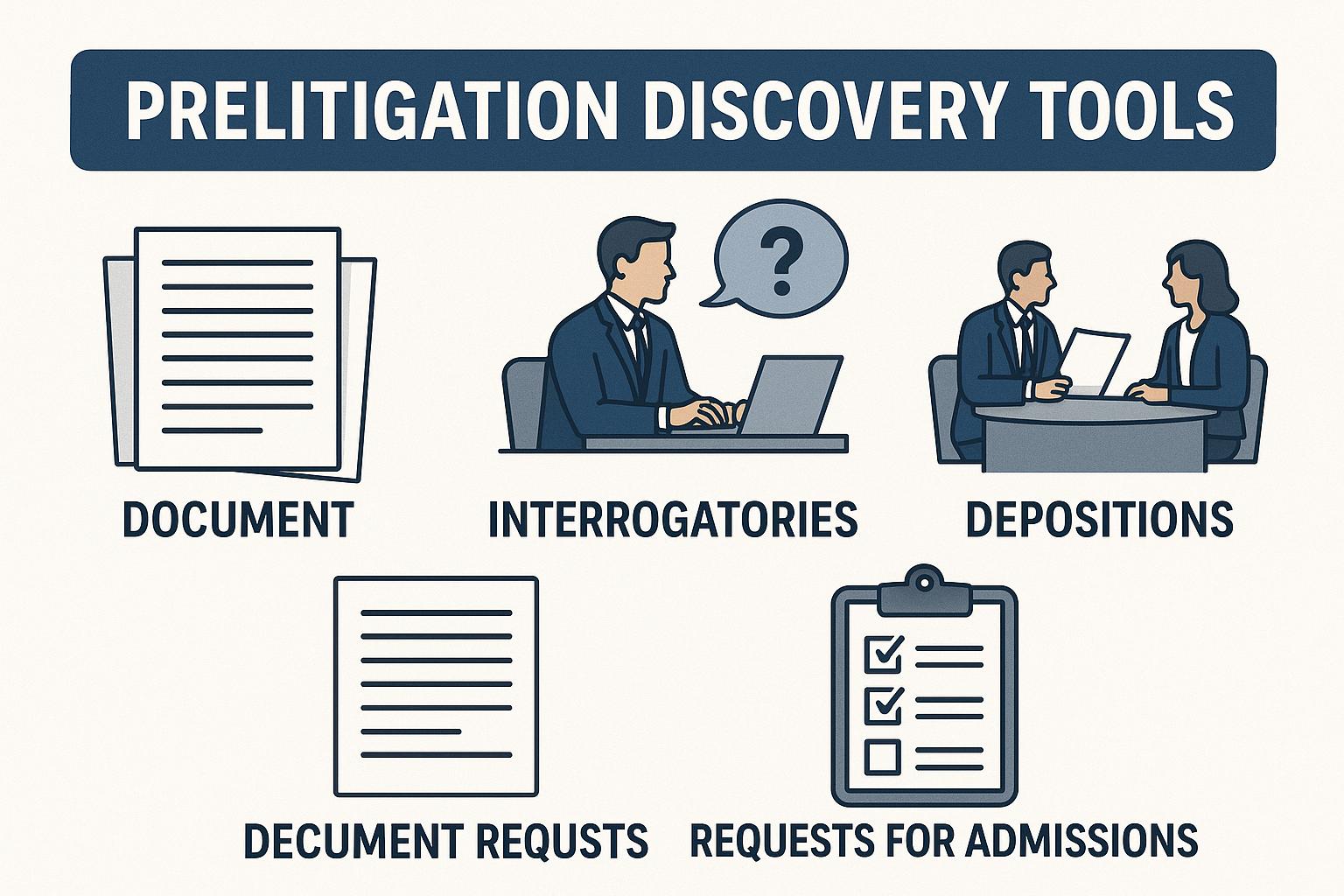
Several tools are commonly used during the prelitigation phase to gather information. Understanding these tools is vital for anyone involved in or considering legal action. Each tool has its unique function and utility in the process of information gathering.
Interrogatories
Interrogatories are written sets of questions sent by one party to another, requiring answers under oath. These questions are designed to elicit detailed information about the facts of the case, helping to clarify key issues. The responding party is obligated to provide truthful and complete answers within a specified timeframe.
These inquiries are strategically crafted to extract precise information, often delving into the fundamental elements of the case. The responding party is typically required to respond within a predefined period, usually dictated by the governing procedural rules. This timeline ensures that the prelitigation phase proceeds efficiently without unnecessary delays.
Depositions
In a deposition, witnesses or parties involved in the potential litigation provide oral testimony under oath. These sessions are typically conducted in the presence of attorneys, and a court reporter records the proceedings. Depositions allow attorneys to assess the demeanor and credibility of witnesses while obtaining firsthand accounts of events.
Depositions serve as a powerful tool to gauge the reliability and persuasiveness of witnesses, providing oral evidence that may profoundly impact the direction of the case. The process of giving a deposition can be quite rigorous, involving direct questioning as well as cross-examinations by attorneys from both sides. This setting allows for a comprehensive exploration of the facts, where nuances such as body language and tone of voice can be as telling as the spoken words.
Document Requests
Document requests involve asking the opposing party to produce specific documents or evidence relevant to the case. These may include emails, contracts, reports, and other records that could shed light on the matters at hand. Document requests are pivotal in uncovering information that may not be readily available otherwise.
The exchange of documents under this tool can reveal previously unknown aspects of the case, potentially altering legal strategies and settlement discussions. It demands thorough organization and accuracy in responding to ensure all pertinent documents are disclosed. Often the process is guided by detailed procedural rules dictating what constitutes a valid document request and outlining the obligations of the party receiving such requests.
Requests for Admissions
Requests for admissions are statements sent to the opposing party, who must either admit or deny each statement’s validity. This tool simplifies legal proceedings by narrowing down the issues in dispute and confirming facts that are not contested.
The streamlined approach afforded by requests for admissions simplifies cases considerably by confirming undisputed facts, thereby focusing on the contested issues that require legal intervention. This tool can be particularly effective in significantly shortening trials, allowing courts to pinpoint and address only the substantive disputes.
Limitations and Legal Considerations
While prelitigation discovery can be an invaluable tool, it is not without its limitations. The scope of discovery is typically governed by legal standards that prevent fishing expeditions into irrelevant or privileged information. Parties must comply with rules of procedure and any relevant statutory limitations. Additionally, there are concerns about privacy and the potential for discovery abuses, which courts may address through protective orders.
These legal constraints exist to balance the interests of both parties, ensuring the discovery process is fair and remains focused on gathering pertinent information necessary for case evaluation. Protective orders serve as a safeguard, allowing courts to restrict access to sensitive information, thereby minimizing potential abuses and protecting individual privacy rights.
Conclusion
Prelitigation discovery tools serve a critical role in the legal process by providing parties with the information needed to make informed decisions about litigation. By utilizing interrogatories, depositions, document requests, and requests for admissions, parties can better understand their position and potentially resolve disputes before they escalate to court. However, adherence to legal standards and procedures remains crucial to ensure the discovery process serves its intended purposes effectively.
Parties engaged in potential litigation should recognize the strategic benefits of these discovery tools and use them judiciously to facilitate favorable outcomes. Ultimately, understanding and navigating the prelitigation discovery process can lead to more efficient, cost-effective resolutions, alleviating the burdens associated with formal litigation proceedings.