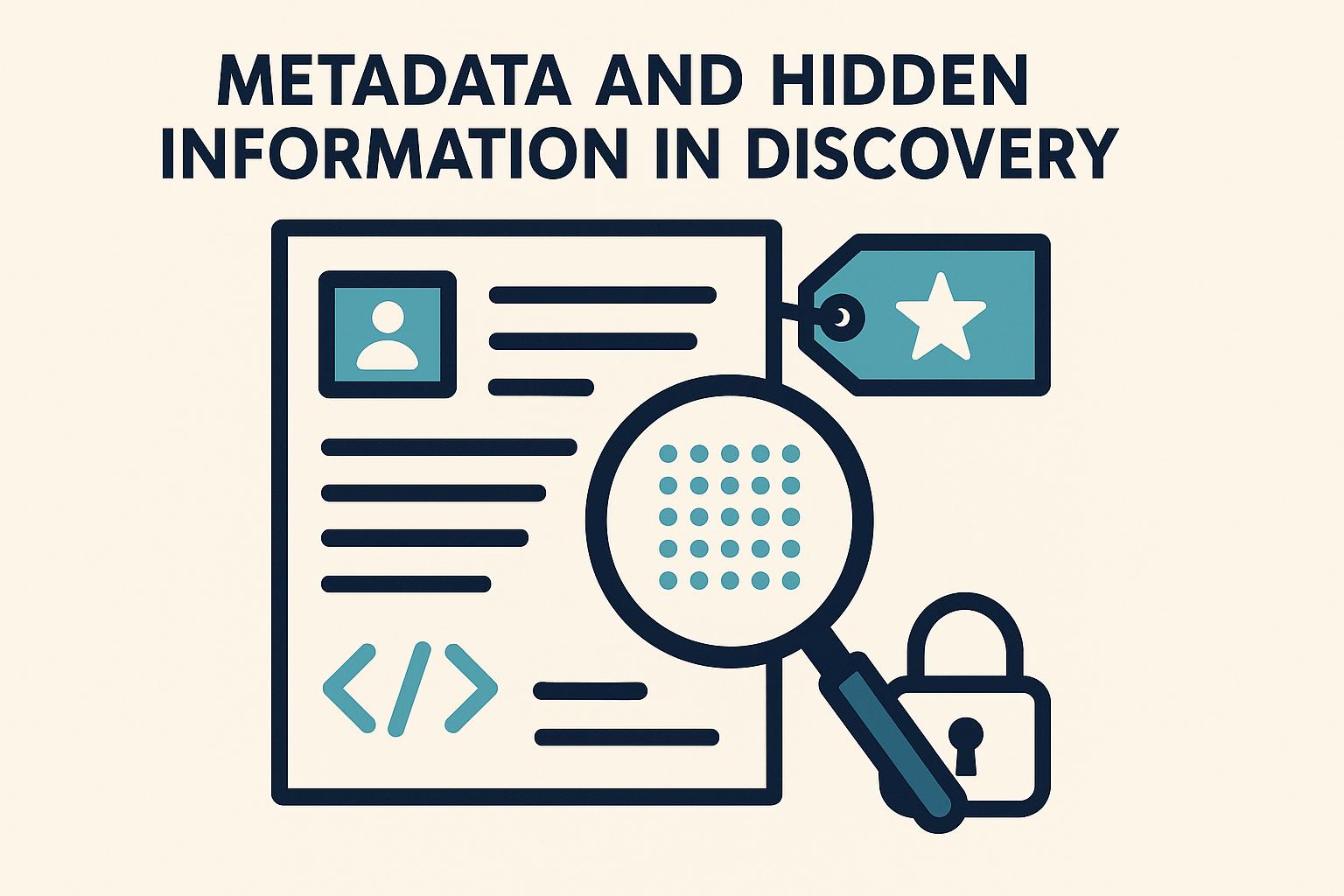
Understanding Metadata in the Context of Discovery
Metadata, often described as “data about data,” serves as a critical component in providing context and additional information about primary data sets. These data sets can comprise a variety of forms, including documents, images, or other digital files. In particular, within the legal field and during the discovery phase, metadata assumes an essential role. This background information can reveal crucial details regarding the origin, authorship, creation date, and any modifications made to the data over time.
The Role of Metadata in Legal Discovery
In the process of legal discovery, parties are typically obligated to disclose pertinent information to one another. Here, metadata can uncover hidden layers of information that might not be immediately visible or apparent. Its presence helps in verifying the authenticity and integrity of documents and other types of files, ensuring that they have not been altered or tampered with in any unauthorized manner. For instance, metadata can reveal when a document was initially created, who created it, and if there have been any subsequent edits, deletions, or movements associated with it.
Types of Metadata
Metadata can be divided into several distinct categories, each serving specific purposes in identifying, describing, and managing the content of data sets.
Descriptive Metadata: This type of metadata is essential for providing information that assists in identifying and describing the content itself. It can include elements such as titles, authors, subjects, and keywords, all of which help in cataloging and retrieving documents efficiently.
Structural Metadata: This classification is crucial for illustrating how different components of a complex object or data set are interconnected. It is particularly important in understanding data sets that consist of multiple parts or require specific arrangements.
Administrative Metadata: It offers technical information regarding file types, software used, and other critical details pertinent to rights management and data preservation. Administrative metadata is key to managing access rights and maintaining digital resources over time.
Hidden Information Within Metadata
Metadata often includes hidden details that are not directly visible within the primary document itself. For instance, electronic documents typically possess metadata that can provide insights into the document’s creator, the date of its creation, times of modification, and records of previous versions. Similarly, email metadata is capable of disclosing the sender, recipient, date and time of communication, and even the IP addresses involved in the electronic exchange, forming a comprehensive communication chain.
Challenges and Best Practices
While metadata can be incredibly beneficial during discovery, it also presents certain challenges. The volume and complexity of metadata can be daunting, requiring skilled legal practitioners to extract the relevant information efficiently, while simultaneously ensuring client confidentiality and compliance with applicable regulations.
To effectively manage metadata during the discovery process, it is advisable to:
1. Employ Tools for Automation: Utilizing advanced tools to automate the extraction and analysis of metadata can save time and reduce the potential for human error. Automation also aids in handling large volumes of data systematically.
2. Filter Pertinent Information: It is important to ensure that only relevant metadata is retrieved and analyzed to maintain the focus of the review process. Expanding the scope unnecessarily can lead to information overload and inefficient utilization of resources.
3. Protect Sensitive Metadata: Given that metadata can contain privileged or confidential information, safeguarding it against inadvertent disclosure is paramount. Implementing strict access controls and using encryption can help in maintaining the security and privacy of such sensitive information.
In summary, metadata is a pivotal component in the discovery process, offering insights that might not be immediately visible within digital files. By comprehending and managing metadata effectively, legal professionals can ensure a more thorough and accurate discovery process, ultimately supporting the execution of justice and maintaining the integrity of legal proceedings. Understanding the various types of metadata, its potential hidden information, and adhering to best practices can significantly enhance the management of metadata in legal contexts.