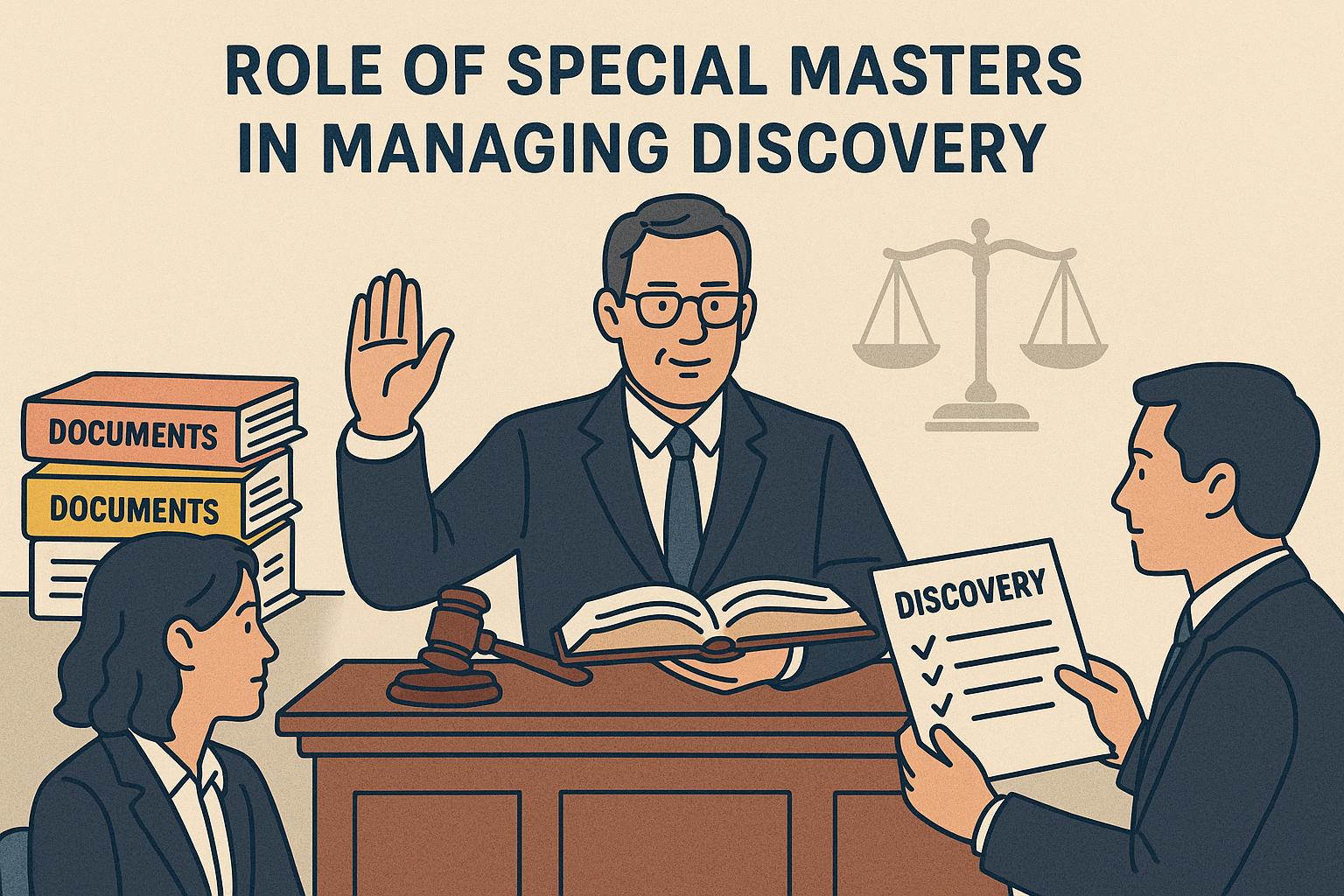
Understanding the Role of Special Masters in Managing Discovery
In the realm of complex litigation, the intricacies and magnitude of the discovery process can pose significant challenges for both the parties involved and the courts overseeing these cases. Ensuring an orderly, fair, and efficient exchange of information is paramount to the success of legal proceedings. To handle this potentially overwhelming task efficiently, courts may appoint a special master to manage various aspects of discovery. This article delves deeper into the responsibilities and roles of special masters in managing discovery, offering a comprehensive understanding of their significance and functionality within legal proceedings.
What Is a Special Master?
A special master is a judicial appointee designated to undertake specific tasks that necessitate a high level of specialization or an in-depth understanding of legal concepts. Their primary role resides in ensuring the discovery process is executed with precision and clarity, thus alleviating the load on judges and the court. The precise authority vested in a special master often varies, defined by the respective appointing court, but they typically hold considerable expertise in law or fields pertinent to the case at hand.
Responsibilities in Discovery Management
The process of discovery is a fundamental phase in litigations, where opposing parties exchange critical information and evidence related to a case. This stage can rapidly expand in scope and complexity, often resulting in disputes or contentious exchanges. To mitigate these issues, the involvement of a special master can prove to be invaluable. Below are some of the key responsibilities they undertake in managing discovery:
Facilitating Document Production
One of the core tasks of a special master is overseeing the production and collection of documents. They ensure strict adherence to court mandates and address any disputes that may arise during this phase. Through their diligent oversight, special masters prevent delays that could otherwise slow down a case’s progression and maintain procedural timeliness and order.
Resolving Discovery Disputes
The discovery phase is often riddled with disagreements, particularly concerning the relevance or breadth of requested items. Special masters function as intermediaries, resolving these disputes independently from the presiding judge, thereby streamlining the legal proceedings and diminishing courtroom congestion. They play an essential role in ensuring both sides abid by agreed protocols and norms during discovery.
Ensuring Compliance with Court Rules
Compliance forms the backbone of an orderly and fair discovery process. Special masters are responsible for monitoring all parties’ adherence to court rules and discovery agreements. They may advise the judge on matters related to non-compliance, significantly affecting subsequent judicial decisions. This aspect demonstrates their pivotal influence on maintaining integrity and order throughout legal proceedings.
Benefits of Appointing a Special Master
The appointment of a special master can yield numerous advantages to both the discovery process and the judicial system as a whole:
Expertise and Efficiency
Given their specialized knowledge and experience, special masters carry out the discovery process far more effectively than a court might on its own. Their proficiency in handling complex legal issues ensures that disputes are resolved swiftly and decisively, allowing the proceedings to continue without unnecessary delays.
Impartiality
Special masters, being neutral entities, present unbiased assessments of procedural disagreements and disputes. This neutrality assures all parties that the discovery process remains fair and equitable, fostering trust in the judicial system’s integrity.
Reduced Burden on Courts
Delegating the details of discovery operations to a special master allows courts to reallocate their resources towards addressing other pressing case aspects or reducing their overall docket load. This facet enhances the efficiency and efficacy of the judicial system, allowing for better resource management.
Challenges and Considerations
Despite the numerous benefits outlined, the integration of special masters within the discovery process comes with its own set of challenges and considerations:
Authority and Scope
While the authority of a special master is distinctly defined by the court, steps must be taken to ensure this authority does not overextend or interfere with the judicial process. The careful delineation of a special master’s powers and responsibilities is crucial to avoid any potential conflicts and ensure proper checks and balances are maintained.
Costs
The appointment of a special master often introduces additional expenses, generally shouldered by the litigation parties involved. Therefore, it is crucial to weigh this financial investment against the potential benefits derived from their involvement, assessing whether their expertise and efficiencies justify the costs involved.
Conclusion
Special masters fulfill an indispensable role in managing the complexities associated with the discovery process in litigations. By exercising vigilant oversight, ensuring adherence to systems of compliance, and swiftly resolving disputes, they significantly enhance the effectiveness and efficiency of legal proceedings. As courts continue to encounter surging caseloads and increasingly intricate cases, the integration of special masters remains an essential facet of the judicial system. Their competency and impartiality are instrumental in ushering smoother and more equitable legal processes, ultimately contributing to a more robust and reliable justice system.